Showing posts with label ebook. Show all posts

Wednesday, April 4, 2018

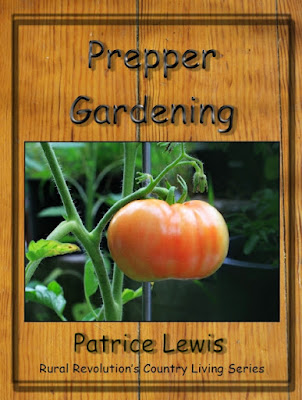
Prepper gardening

I'm pleased to announce a new ebook in our Country Living Series entitled Prepper Gardening. This is a fairly broad piece that covers a number of factors distinguishing between a survival garden and a regular garden. At $2.99 and nearly 8,000 words in length, we feel it's a bargain.


Also, some readers expressed concern about using the checkout features on the Country Living Series website because it requires an address. This is unnecessary information, since the ebooks are sent electronically (not mailed). We've requested this feature be disabled, but were told it was impossible.

So -- and we've tested this -- you can input a false address as long as the town and zip code match. We put up a notice concerning this on the Country Living Series website, but it's kinda small print.

For those wanting to order ebooks, please input the following address when prompted:
General Delivery
Day, FL 32013
Hope this helps!

Tuesday, February 20, 2018

Dozens of new ebooks now available!

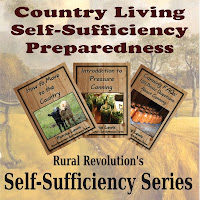
For quite a while now, Don and I have been working on creating a whole bunch of new ebooks for our Country Living Series. In keeping with those we published originally, these new low-cost ebooks are designed to cover unique aspects of rural living, livestock care, preparedness, simplicity, frugality, and rural businesses. All ebooks are in pdf format.


We've also "bundled" a number of the individual ebooks together to provide more information on broader topics. (Note that a few of the ebooks are repeated in some of the different bundles because they're applicable to more than one category.) The bundles are available for 25 percent below the combined cost of the individual pieces they contain.


Additionally, readers of Rural Revolution can get a further 10 percent discount on their total orders by using the promo code RURAL on the checkout page.

Finally, we're looking for other blog or website owners who would be interested in pitching our library of country knowledge on their sites, either by mentioning it with a link, or by posting an advertisement. If you have such a site and want to participate, contact Don at ruralrevolution@hotmail.com. He will provide you with a unique site-specific discount code that you can give to your readers so that they can have a 10 percent discount as well. Not only will you be providing your readers with a valuable resource, but for each order we receive that uses your code, you (the site owner) will receive a further 10 percent of the sales price. If you're interested, contact Don (ruralrevolution@hotmail.com) for further details on payment options and help with designing an ad for your site.


We're very excited about this project and plan to increase the number of books regularly until we become one of the best resources for self-sufficiency on the internet. Thank you to all my loyal readers for your support over these many years.

Wednesday, May 8, 2013

"Bear Poop and Applesauce" is now available!

Have you ever wondered how on earth my husband and I ended up living the lifestyle we do? We didn't grow up farming. In fact, we had remarkably ordinary suburban lives until shortly after we were married. At that point we decided (to the dismay of our friends and families) to chuck it all and leave urban California and move into a shack in rural southwestern Oregon.

This story of our early years chronicles the first decade of country life, through the birth of our children, the beginning of our home woodcraft business, and the establishment of our early homesteading attempts.


Bear Poop and Applesauce is now available as an ebook through our ebook website, Self Sufficiency Series (dot com). The book is 188 pages in length and costs $9.95. I laid it out so (in theory) you can print it with two pages per sheet.

This book has been metaphorically languishing in my drawer for years, but we decided to put it up for sale now... with all proceeds to be used to pay off Don's hospital bills.

And how, you may ask, did we come up with the title? Well you'll just have to read the book to find out.

The journey begins...

Thursday, April 25, 2013

Oops!

A reader brought to our attention that my website Self Sufficiency Series (dot com), through which I sell my ebooks, had been down. The domain name had expired, but since the expiration notices were going to an email address that is now defunct, we never received them.


Anyway, thanks to the diligent reporting by reader John Y., the domain name has been renewed and the site is available once more.


Sunday, November 25, 2012

The Invincible Canner

Once upon time, I thought I was the Invincible Canner.

Oh my, anything I could put in a jar and seal was a success. Astounding! I was invincible! Unbeatable! Indomitable! I could can... ANYTHING!


Take refried beans, for example. My family eats a fair bit of refried beans. They're easy to make, but rather time-consuming; and it bugged me to buy cans of refried beans at the store. So, being the Invincible Canner that I was, I concluded I would can my own refried beans.

This turned out to be much more challenging that I thought.


But I finally succeeded and proved -- told ya so! -- that I was the Invincible Canner.

Therefore it was annoying to get a comment on my Refried Beans blog post from a Master Canner (with actual bona fide credentials), informing me that refried beans were too viscous to safely can at home because home-canning equipment is not sufficient to render this food safe.

What was she talking about? My jars sealed just fine, thank you -- didn't she know I was the Invincible Canner? Who was I, goddess of the pressure canner, to listen to this mere mortal, just because her qualifications exceeded my own?

Harrumph.

So when the Invincible Canner decided to write some inexpensive ebooklets on canning in order to share my passion for this science with lots of others, I invited everyone to send me their basic canning questions so I could be sure to address them all.

And then the research started. I'd been canning for over twenty years and thought I knew it all. Boy was I wrong.

This research gave me a Master Canner education (without the credentials) and taught me an astounding amount of information I didn't know before. Who knew, for example, that milk products were unsafe to can? And fats, such as lard? And -- oh shucks -- the list of unsafe viscous foods included refried beans. Crud. My critic was right.


In short, this research toppled me off the Invincible Canner pedestal I had put myself on, and knocked some humility into me. And humility, as anyone knows, can be painful to acquire.

One of the things I learned is just because a jar seals does NOT mean the contents will be safely preserved for all eternity. Botulism is an insidious little bugger, and it can lurk in foods with certain chemical compositions regardless of whether a jar has successfully sealed.

That's why it's important to consider research done by such organizations as the U.S. Department of Agriculture, which does exhaustive research and testing on safe canning procedures. Normally I wouldn't trust a government agency any farther than I could throw it, but I trust the USDA to give reliable guidelines for canning. In other words, I don’t think the government is trying to undermine our self-sufficiency efforts by advising us not to can puréed pumpkin -- know what I mean?

I hear far too many people say, "I've always done it this way and I've never gotten sick" while trying to justify unsafe canning procedures. And you know what? They're right. People drive for years and years in perfect safety without wearing a seatbelt...until they get into an accident. People smoke for years and year in perfect health... until they get lung cancer. People can for years and years in perfect safety using unsafe canning procedures... until they get botulism.

This is why I trust the USDA's guidelines for what constitutes safe canning procedures over anyone's "I've always done it this way and I've never gotten sick" experience. Past performance does not guarantee future results.

I don't mean to sound like a know-it-all when it comes to canning; I'm merely saying that I learned a whole lot while writing these ebooklets, and I've revised my own canning techniques as a result. I'm also begging people to be safe. Canning is a remarkable science, and it's also become one of the most researched subjects in the food industry. That's why guidelines are continually being updated.

Here is the portion on what isn't safe to can from my ebooklet Canning FAQs: 100 Basic Questions about Canning. I harvested this info from many different sources, but it's all confirmed by USDA guidelines:


51. What should NOT be pressure canned?
There are some things that home canners shouldn’t can at home, even with a pressure canner, and even if those products are available commercially. Commercial canneries have additives, preservatives, and processing controls not available to home canners. They also have professional processing equipment which we can’t duplicate at home.

The foods not recommended for home-canning include:

Foods packed in oil. Canning in oil is not recommended because oil coats and insulates botulism spores and creates an anaerobic micro-environment which allows the spores to survive high heat. To kill botulism spores encased in oil would require pressure canning at such high temperatures and for so long that the food itself would be destroyed. (A small amount of oil, for example sautéing before canning, is acceptable.)
Highly viscous foods. Items such as refried beans, peanut butter, pumpkin purée, or squash purée should not be home-canned. (Cooked cubed pumpkin can be canned at home, but cubed squash will compress during heating and become too thick; it should not be home-canned).
Lard. Too dense and too fatty to safely can at home.
Pickled eggs. Too dense to safely can at home. There are no tested recipes for canning pickled eggs.
Dairy products. Soups (or other foods) made with cream, milk, butter, or other dairy products are not recommended for home-canning. Like oil, dairy products are low-acid and support an environment which fosters botulism growth at room temperature. The fat in dairy products can protect botulism spores and toxins from heat during the canning process. When milk is over-heated, the milk proteins drop out of suspension and separate. The amount of heat that would need to be used to kill botulism is so extreme that the food would be rendered inedible. For this reason, canning milk or canning butter is not recommended as a safe procedure for home canners.
Cornstarch. Cornstarch is a thickener which breaks down during processing; more importantly, it retards heat penetration. For thickening agents, use Clear-Jel, which is a modified corn starch formulated for canning. Clear-Jel does not break down in acid food mixtures, and it does not thicken so much that it interferes with heat-killing of pathogens. Please note that processing times listed in published reference books are not sufficient for using any thickeners other than Clear Jel. Unfortunately this product generally can’t be found in grocery stores. Some online sources include:

- The Ingredient Store www.theingredientstore.com
- Kitchen Krafts www.kitchenkrafts.com
- Walton Feed www.waltonfeed.com

Flour. Some people believe they can make “cakes in a jar” or other foodstuffs which contain flour. This is strongly inadvisable. Home canned flour products (breads, doughs, etc.) are considered very prone to botulism. No one has yet been able to come up with a reliable recipe and canning direction that doesn’t produce botulism some of the time. Flour products are low-acid and “baking” them in a jar is not “canning” and is not recommended.

The reasons behind the inadvisability of canning these foods are generally due to one of two things: either scientific research has demonstrated that home-canning of such foods is potentially hazardous; or the only way to can them is at such high pressures that the results are unpalatable. In other words, if it’s not possible to kill off botulism spores while producing a palatable product, then the food is placed on the “not recommended” list.

There will always be people who think the rules don’t apply to them, or believe they’re special enough to refute the science behind safe canning. This is the kind of sloppy canning techniques I continuously warn about. Remember, past performance (“Granny always did it!”) does not guarantee future results. Canning is a highly developed science, and to assume the rules don’t apply to you is asking for trouble. Be safe.
____________________________

Now of course, I'm not the Canning Nazi. Whatever you do in your kitchen is your own business. If you choose to water-bath tomatoes with low-acid ingredients like onions and bell peppers "because granny always did it," fine. If you don't think the USDA guidelines are worth following, I won't agree; but I won't argue either. If you believe you can refute the USDA guidelines because you, too, are the Invincible Canner, then so be it. Just don't say I didn't warn you.

I am passionate about canning because I believe it is one of the most remarkable ways to preserve food on this earth. It gives me tremendous pleasure to share and invite canning stories, tips, recipes, and advice. But at least on this blog, I will always try to post advice that's backed up by science.

I no longer believe I'm the Invincible Canner. I now know there are things that are not safe to can in my beloved All American pressure canner. And since I want my family to be able to depend upon me to provide food that is safe to eat, I won't can up things the USDA specifically advises against.

Now let the arguments begin...

Wednesday, August 15, 2012

Coming soon - a new ebook: Bear Poop and Applesauce

Have you ever wondered how on earth my husband and I ended up living in the country? Well believe it or not, I wrote a book about it, drolly called Bear Poop and Applesauce.


It's been metaphorically languishing in my drawer for years, so I decided to dust it off and make it available as an ebook. I haven't finished the final layout yet, but so far it's running around 200 pages and has many photos to illustrate.

This ebook chronicles our first decade in the country, all of which were spent in southwest Oregon. It details why we left the city, how we started a homestead, how we started our business, and when our girls were born. It covers our early livestock experience, how we started a garden, how we fixed up a fixer-upper, etc. In short, it covers the first ten years of our rural experiences.

The book runs over 200 pages and is laid out in half-page sheets, so two pages can be printed on one sheet of paper (or of course, the book can be read on your computer screen). At the end I include what was then a monthly chronicle of what happened in a typical year, along with a recipe for each month. I'm pricing the ebook at $9.95.


And how, you may ask, did we come up with the title? Well you'll just have to read the book to find out.

Sunday, April 15, 2012

Mentioned on SurvivalBlog!

My e-booklets got mentioned on SurvivalBlog! Whoo-hoo!


How cool is that?

Wednesday, April 11, 2012

E-booklets are available!!!!!

At long last -- drum roll, please -- the e-booklets are available! Whoo-hoo!

We tested the system last night and it works perfectly. So please make note of the following website:

Self-Sufficiency Series
www.selfsufficiencyseries.com


These are pdf downloads. The advantage of pdf is (a) everyone with a computer can download; and (b) I was able to use a lot of nice color photos. A pdf download also means you can enlarge it if you want to see a photo more clearly.

I need to clarify these are e-publications only -- there are no print versions available. On the other hand, there's no reason you can't print them yourself. I deliberately set them up so they'll print on 8.5 x 11 paper.

An additional note of clarify, particularly for readers outside the United States: all companies, measurements, temperatures, products, etc. are, of necessity, American. It's impossible for me to know all the products or companies in other countries/continents, so I apologize if some of the specific product recommendations don't apply to you.

I hope you find these booklets useful. My goal is to keep them coming -- I have upwards of about thirty titles planned.

By the way, it's time for a note of thanks. All of you have helped so much in bringing these booklets to life that I can quite literally say I couldn't have done it without you. So... thank you!!!

Happy reading -- and canning!

Tuesday, April 10, 2012

Close... oh so close...

We are thiiiiissss close to having the ebooklets on canning available for sale. The booklets are done; what's been occupying Don's time is getting a separate website up and running through which they can be ordered. This meant setting up PayPal buttons, etc. -- altogether a complex process.

Initially we'll have four booklets for sale as follows:

Introduction to Water-Bath Canning - 11 pages, $1.50


Introduction to Pressure Canning - 12 pages, $1.50


Canning FAQs: 100 Basic Questions about Canning - 29 pages, $3.00


I've also consolidated much of the advice I've given over the last couple of years on the subject of moving to the country into an ebook.

How to Move to the Country - 16 pages, $2.00


All of these booklets are 8.5 x 11 in size, so you can print them if you wish (or just read them on the computer). The final step before opening the website is to have a friend use her credit card and purchase a copy of each booklet, to make sure the transactions go through without a hitch (and yes, we'll pay her back, LOL).

Anyway, stand by... these will be available soon!

Wednesday, March 21, 2012

Random pix

Some random pix from the last couple weeks.

It snowed very calmly and prettily all day, the beginning of spring. No wind, no drifts, about five inches total. Really, one of our nicer snowfalls.


Our woodpile.


The view down our driveway.


Needless to say, the dogs thought it was great stuff. Major really stands out in this weather.


Eating snow.


A couple of days ago, we had robins galore in our yard. I don't know what they found so fascinating to eat by this particular tree, but I counted about twenty in the vicinity.


Boy do I love robins.


Goodies for our weekly potluck (it was my turn to bring dessert): lemon meringue pies and survival cookies.


Goodies the next morning: leftover survival cookies and fresh hot bread.


Tea with a friend (who has lots of children).


A squall that came through a few days ago.


Gas prices about March 13...


...March 15...


...and March 20.


Older Daughter is moving from Algebra I into Geometry. I mistakenly thought we had some books in reserve for this subject, but I was wrong. So on Tuesday we went into Spokane to the Homeschool Bookshop to stock up.


This is a super-dooper spiffy place chock-full of extraordinary resources. What a pity it's so durn far away.


These photos don't even scratch the surface of what's in this place. And while we were shopping, the owner's children were giving music lessons in the lower level.


I found this cartoon on the store's website. Cracked me up. I've had days like this.


To Older Daughter's dismay, I was able to find some good resources, so we have no excuse not to dive right in.


Prototype for my e-booklet on canning FAQs, printed out for the first round of editing.


Setting up a photo shoot for canning equipment to illustrate.


A pretty sunset. It looks like these shots are from different evenings, but they were only taken a few minutes apart.