Showing posts with label inflation. Show all posts

Tuesday, January 28, 2025

Got eggs?

Last week, I read an article that an egg-production facility in Cokato, Minnesota, went up in flames. The facility produces upwards of six million eggs a day. Tragically, tens of thousands of hens died.

This fire is yet another nail in the coffin of egg availability. Bird flu panic has caused millions upon millions of chickens to be culled, creating shortages and price increases like crazy.

Additionally, the state of Georgia has halted all poultry-related activities due to bird flu concerns. This means all "in-state poultry exhibitions, shows, swaps, meets, and sales are suspended until further notice," with a corresponding massive ripple effect over multiple industries.

Now the prognosis is that egg prices will stay elevated forever. Seems a little pessimistic, but there you go.

The shortages (and elevated prices) have hit locally as well. A couple weeks ago while in our local grocery store, I saw this:

The less expensive eggs were cleaned out, while the pricier ones remained.

We seldom buy eggs, since we keep them on hand mostly for baking. But for those who depend on eggs for an inexpensive source of protein, these prices and shortages must be hitting hard.

We're hoping to get a coop built and start a flock of chickens this summer. In the meantime, when we need eggs, I'm grateful we can buy them from the nice older couple down the road who usually charges $3.50 a dozen.

Thursday, February 2, 2023

For the love of eggs...

With the current shortage and price spike of eggs, the memes have started. Here are a few:

(Is it just me, or does this look like a rooster to you?)


Or, as one headline put it, "Americans may need to reprioritize what is attractive in a good partner: Does he or she have chickens?"

We have neighbors with chickens. They sell eggs periodically. They had a sign by their driveway last summer that eggs were available for $3/dozen. The sign came down after a couple weeks. Last week the sign was back, this time advertising eggs for $4/dozen. The sign came down after a couple of days. I have a feeling they're being besieged with demand, especially at those prices, and their hens can't keep up.

Thursday, January 19, 2023

What are your best cheap meal ideas?

In response to my recent post "Shopping, ug!" on the subject of inflation and availability, one reader wrote: "Prices are going up and have gone up every week I’ve been shopping. My husband and I both work and we have not gotten pay increases. The grocery bill is really hurting our family right now. I’d love to get ideas on cheap meal ideas for a family."

Cheap meal ideas – I think that's an excellent topic to bring up.

Already a few readers have chimed in. One wrote: "I have 5 children & when they were all home I would make economical meals that stretched. I made some of my own sauces, etc. You can check out budget101 for ideas, along with searches for frugal recipes. I made up meal plans of what to do with hamburger, chicken, etc. I had summer meal plans & busy night ones. It worked for me."

Another reader: "Also check out Living on a Dime website; they have a huge amount of frugal tips and recipes (for free), along with their 'dining on a dime dime' cookbooks (e-book or hardback) available, excellent resource, all of their resources have helped me immensely."

Yet another reader wrote: "Snacking, aka, refrigerator grazing, can sabotage any budget. Plan snacks, not just meals. And find a way to incorporate them into your overall nutrition plan for your family. Don't make other snacking easily available. Something else that can sabotage the budget is everybody's other half. Spouses who shop together are more accountable to the process and each other. Family meetings. The whole family needs to get involved in the planning and budgeting process and the why's and how's. I was listening to a program about an Indian tribe once, and at tribal meetings, children also had a voice. Sometimes it's the voice of a child who helps guide the way."

I think frugality is on everyone's minds these days. Please comment and provide your favorite ideas for eating on the cheap. It will help all of us, not just this one reader.

Wednesday, August 24, 2022

Radical frugality

Every so often I go on a frugality bender in which I become quietly obsessed with spending less money than before. I'm a huge advocate of frugality. It is a powerful fiscal weapon. In fact, arguably it's one of the most powerful weapons in anyone's financial arsenal. Over the decades of self-employment, we were forced into becoming students of thrift, and we've remained so ever since.

Recently I stumbled across an article entitled "Radical Frugality" which outlined a woman's efforts to "live within a limited income as a bulwark against a consumer culture and capitalist agenda." She touches on the desperate situation of the working poor, and the increasing number of people losing homes, jobs, and businesses in the current economy, 

The author writes, "As I like to point out, many people are lucky to be earning $15 an hour, but we are living in a $100-an-hour world. Every time we step out and into the marketplace, we are faced with the costs of goods and services that have outpaced our income."

She doesn't offer much by way of concrete recommendations on how to adopt this radical frugality except, oddly, a suggestion of communal living. (This is, of course, what we're doing with Older Daughter as she takes over the woodcraft business.)

But the concept of radical frugality is a good one, especially in this time of skyrocketing inflation. Increasingly, more people will be forced to become radically frugal whether they like it or not, so I figure it's better to adopt this lifestyle now rather than later.

What I hope is this Novel Frugality can be seen as liberating, not traumatizing. If you're used to an affluent lifestyle, then yeah, it's a difficult adjustment. But living low can be amazingly freeing (no more worrying what the Joneses think!).

However frugality is a learned skill, just like anything else. So I thought I'd open up the comments and get reader input on what you've done to become thriftier. What advice would you give (radical or not) to the newly frugal)?

Monday, July 11, 2022

Planning ahead

Last October, I took a fast trip to the city with one express purpose: To purchase six rolls of field fence. (It was significantly cheaper to take this long trip than it was to purchase the fencing locally. We looked.)

We already had four 330-foot rolls we had purchased in December of 2020; but in the ten months between one purchase and the next, the price of each roll doubled. Read that again: the price doubled. Understand that at the time we purchased this fencing, we knew we were at least a year out from getting cows. But we also knew (a) we would need this fencing when the time came; and (b) it sure as heck wasn't getting any cheaper.

Over and over and OVER again, we find ourselves doing this: Purchasing materials needed for future homesteading projects in an effort to beat inflation and supply-chain disruptions. Lumber. Fasteners (nuts, bolts, screws, etc.). Deer netting. Gravel. Cattle panels (sometimes called hog panels). Bulk diesel.

Last week Don made another such purchase: Drip irrigation supplies. We used drip irrigation in the garden in our last home with great success. Not only does it save water, it also saves labor. We knew we wanted to duplicate this system in our own future garden.

Before ordering, Don confirmed with the company that the supplies were available and could be shipped immediately. Then he sat down, mapped out our proposed garden areas, and calculated what drip irrigation components we needed. Then he ordered.

The order came in this week, and I can't tell you how happy I am to see it!

(Side note: Some women get all gushy over clothes or jewelry. I get all gushy over lumber and drip irrigation supplies.)

It strikes me that a lot of people are engaged in similar behaviors – planning for future projects and purchasing needed supplies now, before prices go up further.

What are you purchasing ahead?

Wednesday, June 1, 2022

Chicken prices

Yesterday I had occasion to go into my favorite restaurant-supply store (Chef's Store) for a minor purchase. While there, I inquired about the cost of a 40-lb. box of boneless skinless chicken breasts. (I'm beginning to think of this as my benchmark item for tracking inflation.) I like canning up chicken, but the prices have been too high lately.

 
Three months ago, if you recall, I called for the price of this item and was told it was $135. I did not purchase the chicken. Before that, in January, the price was $110. I didn't purchase chicken then either. (And boy do I regret it.)

However yesterday, the price had zoomed to $177/box. Major ouch.

So let's track this, shall we? For a 40-lb. box of boneless skinless chicken breasts:

• Jan. 12: $110

• Feb. 26: $135

• May 31: $177

Unless my math is off, that's about a 62% increase in four months. Meanwhile gas in our neck of the woods is about $4.95/gallon.

I honestly don't know how people are coping.

Saturday, May 14, 2022

Friday, December 3, 2021

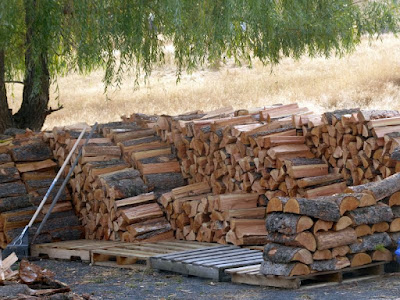
Firewood shortage

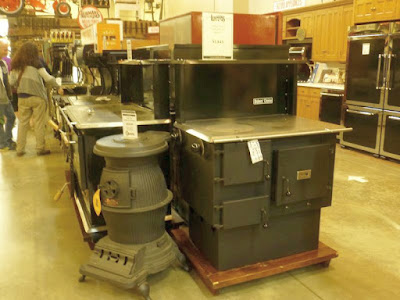
A couple weeks ago, I stumbled across an article entitled "Americans Panic-Buy Firewood And Stoves Amid Energy Crisis": "The global energy crisis has led to a spike in natural gas, heating oil, propane, and power prices, making the cost of heating a home this fall/winter very expensive. As a result, Americans are panic buying cords of wood and stoves to deflect soaring fossil fuel prices. ... 'Everyone is extremely concerned about how they are going to pay for the cost of home heating,' said Brian Pieck, the owner of House of Warmth Stove and Fireplace Shop in New Milford, a town in rural western Connecticut. He said that concern had led people to panic buying woodstoves, adding his sales for woodstoves over $2,800 are up 50%. 'Our manufacturer is working feverishly around the clock.'"

Curious, I reached out to my contact at Lehman's, Glenda Ervin, and asked if this if this is what she saw reflected in the store. She replied, "Yes, wood heating and cooking stoves are in great demand. One of our wood-cooking stoves has a year-long waiting list, but they are still being pre-ordered!"

I did a little more internet research and saw confirmation of this trend:

• Firewood demand soars amid rising fuel costs:  "Americans' demand for firewood is on the rise thanks to surging fuel prices and firewood suppliers are struggling to keep up. ... Phil Clement, who has operated Phil's Firewood for nearly 30 years in Jefferson County, New York, [said] keeping up with the high demand has been a 'struggle.' 'It's been a lot busier than we've had in the past. It's just never-ending,' Clement said. 'It seems like as soon as you're getting caught up, the phone rings again and you get more orders.' Clement said high fuel prices are unquestionably to blame for the demand for firewood. 'Everybody's worried about (firewood) prices because firewood follows the price of oil,' Clement said. 'It takes diesel fuel to produce the firewood because logging and everything like that runs on diesel fuel.'"

• Feeling the burn: Firewood sales, prices are blazing: "Amid the inflation surge that's rippled through the U.S. economy and touched thousands upon thousands of products, one of the more obscure items on the list is firewood. It's a fuel from earlier times, so niche an industry that no one appears to even try to track pricing on a national level. Talk to firewood vendors in state after state, though, and they'll all tell you the same thing: Sales are booming on the eve of winter, and prices are soaring."

Have others noticed this? Is anyone transitionng to wood heat this winter in response to energy prices?

Sunday, May 16, 2021

Project triage

Don got a shock to his system this week.

He's working on a shop building, you see. This will be a building-within-a-building – a walled-in dedicated space for his tools inside our barn.

The original plan was to insulate the shop walls and install a wood stove to warm it during winter work. The ceiling would also be insulated, and it would be roofed with sturdy flooring material so it could be used as storage via a set of stairs he would build.

Now it seems none of these plans will come to fruition any time soon.

The shock came when Don started pricing insulation. Bales of insulation have tripled in price, mirroring the tripling of lumber prices. The estimated cost to insulate just the shop is $3000. The estimated cost to frame in the walls and ceiling, insulate them, and floor the ceiling to make it usable would cost something on the order of $5000. Five thousand dollars!!

Don exploded when he saw those prices, and refused to pay them. In some ways, the skyrocketing price of insulation jarred him as nothing else has done so far in this crazy year of supply shortages and lockdowns.

This means it's time for some triage – not just financial triage, but project triage as well. We need to focus on core infrastructure – livestock stuff, fencing, garden, and low-tech items to keep us going.

We started by making a list of projects we want to accomplish in the next year or so. Here's what we came up with:

• Chicken coop (build)
• Shop (build)
• Guest house (build)
• Garden (build)
• Deck (repair)
• Hot water backup (install)
• Wood cookstove (install)
• Storage units (we're renting two storage units in our old town, and we have to empty them)
• Cattle infrastructure (build)
• Fencing around pastures (install)
• Dog yard (build)
• Organize barn
• Peaches/blueberries (plant)

Then we numbered the projects in order of importance. The numbering system is based on a number of factors: immediacy of need, weather, availability of materials, amount of time it will take, amount of time we have available, and seasonal timing. We already know we won't have a garden this year, for example, so building the garden infrastructure is not critical at the moment. Here's our ordered list for projects we hope to accomplish over the next 18 months or so:

1. Dog yard
2. Plant peaches/blueberries
3. Empty storage units
4. Organize barn
5. Install wood cookstove
6. Hot water backup
7. Chicken coop
8. Fencing
9. Cattle infrastructure
10. Shop
11. Garden
12. Guest house
13. Deck

This is just a partial list; I'm sure more projects will crop up as the year progresses.

But even within this list of projects, we need to grapple with a lack of supplies – as well as a lack of affordable supplies. Instead of insulation, for example, we're thinking on packing spaces with straw. Instead of sheet rock (in the shop), we're thinking of tacking up cardboard. These solutions might also work when it comes time to build the chicken coop. No clue yet what we'll do for roofs and ceilings.

Proposed chicken coop design

We're making intensely careful use of the materials we have on hand. For example, in December – even before we moved in – Don ordered some field fence, T-posts and about 20 cattle (hog) panels to be delivered to the house. I'm so grateful he did, since all of those items have skyrocketed in cost in just the last three months. He also managed to find a good deal on a couple of almost-complete units of 2x6s and 2x4s. We're using them judiciously.

Every scrap of wood we've been able to salvage, every fragment of materials left here by the previous owners, every deal we're able to scrounge from local sellers, every iota of supplies we can salvage one way or the other – we're squirreling them away for projects. It's ironic that the pantry Don built just three months ago would now be far more expensive to construct.

We're not in dire shape financially. We're actually doing pretty well right now. But parting with too much of our reserve cash is just too scary. So, we'll just continue to do what we've done for 30 years: adapt, think outside the box, pare our expenses to the bone, and live frugally.

We'll also continue to thank God for all our blessings: health, home, family, and experience in rural living.

Sunday, January 18, 2015

Inflation? What inflation?

I'm in shock. Sticker shock, that is.

We're working on an order of tankards. The customer would like them later this week, so Don's finishing up sixty pieces. He shot them with the first coat of varnish, then waited until they dried so we can scratch them (with 000-gauge steel wool) and brush them, then shoot them a second time with varnish.


But we were out of steel wool, so I volunteered to go to the hardware store to get some.

"While you're there," said Don, "could you pick me up some tomatoes?" My hard-working husband asks for very little, so a few out-of-season tomatoes is a treat I'm not going to deny him.

So off I went -- with $18 in my wallet. No problem, right? I mean, how much could a few tomatoes and some steel wool come to?

Well as it turns out, $19. I had to scrabble some coins together from the dashboard of the car to finish paying for everything.

The tomatoes were $2.99/lb. The total for five tomatoes came to $7.05. This was so startling to the checkout lady that she rechecked both the weight and the price, then shook her head sadly as she bagged them up.

At the hardware store, I confidently expected my remaining $11 to cover two bags of steel wool. Wrong. Steel wool, it seems, is now $5.99 per bag. As I said, I had to scramble for the last few coins to complete the sale.


I got back into the car stunned at the cost of these two items. It's not like I haven't had sticker shock before. But for Pete's sake -- $19 for two things...??!!


Therefore it was with grim amusement that Don forwarded me a ZeroHedge article on the official "lack" of inflation. This came on the heels of two articles linked on Drudge about the increases in food and electricity prices.

The ZeroHedge article is amusingly entitled There Is No Inflation (Unless You Eat Food, Use Water, Live In A House, Get Sick, Go To School, Or Do Taxes). It illustrates how deliberately manipulative government statics on inflation are for the common person. These number-crunching bureaucrats apparently never take a jaunt to the store for tomatoes or steel wool and leave with moths flying out of their wallets.


The article had a table showing the annual price increases for items that might impact your life on a daily basis, such as meat (up 12.7%), eggs (10.7%), fruits and vegetables (up 4.1%), butter (22.5%), and hospital care (up 4.9%). The funny thing is, ZeroHedge got these figures from an "official" government site. We already know they massage numbers -- so these price increase represent the massaged numbers. Are we having fun yet?

Hard on the heels of this article was another article which documented the record-high prices for meats, poultry, fish, and eggs. "In January 1967, when the BLS started tracking this measure," notes the article, "the index for meats, poultry, fish, and eggs was 38.1. As of last December 2013, it was 239.151. In November 2014 it hit 260.247. And in December 2014 it hit a record high of 261.002, an increase of 9.1 percent in one year."

Yet another article noted, "Data released today by the BLS indicates that the electricity price indexes hit all-time highs for the month of December and for the year. 2014 was the most-expensive year ever for electricity in the United States."

But remember: "Inflation? What inflation?"

The bottom line, folks, is we are having the (steel) wool pulled over our collective eyes by those who want to convince us the economy is just ducky.

I challege the pencil-pushers at the Bureau of Labor Statistics to go shopping for two items with $18 in their wallet, then tell me to my face there's no inflation.

Okay, rant over.

Thursday, March 3, 2011

Everything you wanted to know about Economics

 (But were sorry you asked.)

Just before Christmas, I did a "guest" piece here at Rural Revolution called "A Sermon." I got a lot of great feed-back on it. Most folks seemed to agree with my belief that we have already gone past the tipping point here in the U.S. (and by default, in the rest of the world too).

One of the comments on the piece was written by "Anonymous Patriot," one of our regular readers, frequent commentators, and part of the RR family. She asked me for some amplification on my thoughts on what's coming. I waited a while before addressing her questions, mainly so I could figure out just what I really thought about them.

Let's do the disclaimer thing first. One, I'm the last guy in the world to ask for advice or prognostication. Once, as a kid in the more "relevant" public educational system of the 70's, my whole class was given an ESP test. Lots of cards were held up by the teacher facing away from us and we had to guess what she was looking at; wavy lines, stars, circles, etc. This was a full blown test, three sets of cards, our answers marked on test cards. I don't place a lot of truck with such things, but I'll tell you one thing. I scored lowest on the test. Not just lowest, but statistically way below even just chance. Apparently I am blessed with a powerful anti-ESP.

But fortunately I don't need to use eldric mind powers or "The Force" to be able to read the writing on the wall. I spend a fair amount of my on-line reading at sites with bonafide economic experts. While I don't always get all the acronyms, I do okay on the graphs and pie charts. And I'm a full believer in simplicity. Finance and economics is really very easy to understand once you strip away the manure that all professionals add to justify larger salaries. I know all about this, I was once a geotechnical engineer and engineering geologist. We would never use a fifty cent word when a twenty dollar word would do.

So to start here are some simple economic truths:

1) You can not forever spend more than you are capable of generating.

2) Currency (paper money and conveyances such as stocks, bonds, notes, etc.) are only commonly shared fantasies. They only work so long as people believe they represent real value.

3) Ponzi schemes will always fail in the end. And it doesn't matter if they are being run by a con man or a government.

So now to AP's questions.

1) Do you have any specific ideas about what we can expect? For example, hyperinflation leading to riots or perhaps union strikes which lead to food and gasoline shortages.

2) Do you envision widespread violence or peaceful protests or neither? How do you think the majority of the people will react to a sustained shortage of gasoline, for example?

3) When do you think a definitive and eye-opening SHTF scenario will unfold? Has it already begun (and most people missed it)? Will it happen in 2011 or 2012 or later?

4) If the government were to collapse, what would you suggest to take its place? Would you return to the Constitution or scrap it and start anew?

Given that economics can put even those with tooth picks jammed under their eyelids to sleep, I'll answer only the hyperinflation question today. Trust me, it will be too much even at that.

But first I have to define a few terms in my own long-winded style.

Right now the big argument amongst the SHTF financial gurus is the deflation/inflation debate. Both sides have respected experts with lots of acronyms after their names, essentially calling the other side a bunch of blithering idiots. My acronym supply is considerably more modest than theirs, but I have one thing they currently don't have: a PhD in poverty. So I make my predictions not on the basis of REMIC's, LTV's, CPI's or GDP's. I use YWHM. (“You want how much??!!”)

Deflation

Deflation essentially means that no one is spending any money. Consequently prices are forced down because it's better to sell something cheap and pay the bills rather than have it sit on the shelf. The big worry with deflation is that once you (and the million other you's) sell your product for less than you hoped to make, then you too will be reluctant to part with your diminished cash, forcing more deflation.

Inflation

Inflation means the prices on things go up. The money you have doesn't go as far. It's harder to pay the bills, buy the food and purchase the gas you need to get to work. The real mechanism here isn't that things have gone up in value; it's that the value of your currency has gone down. How does that happen? Someone (legally this would have to be a government, otherwise it's a crime [irony alert]) decides that there just isn't enough money out there so they print and distribute a lot more money. But here's the important part: that money is not attached to a real or existing value. It's created just by turning the proverbial crank on the printing press. But why does a government do this? Oh I don't know....suppose it decides that it simply MUST spend more than it takes in.

Whew!! That was starting to get to the point where I could charge big bucks for it. So let's cut to kitchen counter economics. The eggheads who argue deflation-inflation don't seem to see a simple reality. In times of monetization , inflation is what you get for the things you have to have. Deflation occurs for those things you might want, but can do without.

Examples?

Housing right now is deflationary. "But Don," you say, "Everyone needs housing." True. Except for one thing. Everyone HAS housing. With the exception of the relatively few truly "homeless," everyone on this snowy night is indoors, even those who've lost their homes to foreclosure and have had to move back in with Mom and Dad. Go out shopping and look at all the items for sale. Automobiles are selling cheaper right now. You can get a great deal on a room in Vegas. The latest whiz-bang electronics are going down in price. Why? Well if you might lose your job tomorrow you'll probably decide to hold off buying the latest big screen/computer/cell phone. But the folks who make or provide these things have to eat too. So down goes the price even at the expense of profit.

Now head off to the grocery store. But first fill your tank with fuel. Don't forget your doctor appointment to check that suspicious lump. Prices up? There's the inflation. You’ve got to eat. You’ve got to drive. You’ve got to take care of yourself. To be fair, Inflation hit those manufacturers of the big screen TV and the pet rocks too. But they are in a bind. They have to lower their price or you won't buy. You don't NEED what they’ve got.

Hyperinflation

Hyperinflation is a whole different category of fish. You'd think that hyperinflation is just inflation on steroids. And they do appear to operate on the same basic principles: too much money chasing too few things. But that isn't really the story on hyperinflation. Hyperinflation is actually a mental condition rather than a financial problem. Remember rule Number (2) above? Money is only a shared fantasy. So long as we all agree that a small piece of linen with the face of a dead president on it actually represents a value, then money works much better than hauling a side of beef around to trade for a new MP3 player. But if that fantasy is damaged or destroyed, then the natural inclination is to get rid of those miniscule engraved portraits as quickly as possible. This fantasy is hard to shake. After all, we've lived with it all of our lives. So how does this failure of shared belief occur? Well there can be a number of flash points. And none of them are a sure trigger for hyperinflation. Hyperinflation may happen as a result of wars, political or social upheavals, aggressive monetization (meaning too much money being created without any underlying value) or ...a sudden loss of confidence in government securities backed by nothing. (Any of these sound familiar?)

No matter what the flash point, what it means is a sudden and massive desire on the parts of financial institutions (and later the public) to get rid of money and buy essentials (i.e commodities: food, fuel, etc.)

An example?

Suppose that a few large banks suddenly get the silly notion that all of those U.S. treasury bonds they were forced to buy by the Fed in exchange for a bailout are actually not worth much. Maybe this occurs because nobody comes out to play at a treasury auction. So the banks begin to sell their stockpiled treasuries off...hard. The money they get will be shoveled into commodities because by that point there's nowhere else for it to go. The Federal Reserve is forced to buy those treasuries back to keep them from crashing. They will do that by creating even more money to pay for the treasuries. So let's see. We have massive buying of commodities (food, fuel, metals) creating rising prices because of demand. And lots of paper money going down in value rapidly in relationship to the hard assets. About this time, those of us who weren't already leery of cash (and that's most of us) are going to realize that we'd better get rid of our cash quickly for the same reasons. So...the minute you get your paycheck, it's off to the store or the gas station. The owners of those businesses need to move that cash fast as well because the commodities they sell are going up in cost as well. And so on. Hyperinflation quickly becomes self-perpetuating.

Whew! Sorry it took so long to get to this point. What was the question again?

Oh right. The answer is: Yes.

I anticipate hyperinflation. When? I don't know. Why? Because we are insanely continuing our currency devaluation policies. Hyperinflation is like a forest fire. And right now the economic woods are dry. The air is hot. The breeze is strong. All it wants is a spark. Will the unions riot? Sure they will. They are already doing so. All over the world. So will everyone else.

Fuel shortages - yes.

Food shortages – yes.

Next time I'll take on question number 2. One good thing though. Pretty sure it won't require any toothpicks.

- Don Lewis

Monday, February 14, 2011

A taste of things to come

Cha-ching!

Clothing prices are set to rise 10% in the spring, mostly due to increased cost of cotton.

The cost of produce is skyrocketing because of the freezing weather they've experienced in the southern U.S. and northern Mexico.

Hang on, bumpy ride ahead....

Saturday, November 13, 2010

It's starting

For some time now we've been hearing dire news stories about inflation.  Well, I'm beginning to believe them.

A couple weeks ago I went into a restaurant supply store in Spokane to buy some bulk spices.  Since we intended to get a bag of rice at some point in the future, I made a special point to note the price: $14.50 for 50 lbs.

Yesterday I went back to the same store to buy the rice.  The price?  $18.50 for 50 lbs.  Same brand, same type, new cost.

It's starting, folks.  If you can stock up on food, the time to do so is NOW.

Tuesday, September 15, 2009

It's starting...

I just learned that our electric bill will increase by 13.2% starting in October. That means our average $45 monthly bill will increase by almost $6. While this sounds like a trivial amount, we see it as just the start of a tidal wave of higher prices coming our way. It triggered a discussion between my husband and I as to what we could do to cut our bill.

It was a tough discussion because we couldn't come up with anything appreciable to save electricity. I think most people would agree that $45/month is fairly reasonable for running a home, a farm, and a business.

Some possibilities for trimming: We could replace our ten-year-old 25-cubic-foot chest freezer with a more energy-efficient model, but an outlay of $700 in order to save a few bucks a month seems like a poor tradeoff (at least until such time as the freezer gives up the ghost). I keep nagging the kids to turn off the bathroom light when they're through (our bathroom has no window but we have two 4-watt nightlights in it, more than adequate illumination for brief visits) but so far without much luck. We could unplug the TV/VCR except when not in use, but will that save an appreciable amount of power? We could replace all our incandescent bulbs with CFL's, but I prefer not to bring poisonous objects into my home if possible.

Thoughts, anyone?