Reader Ken sent this. Cracked me up.
This is a parody from the YouTube channel of a fifth-generation Minnesota farming family. Their video page, called Millennial Farmer, depicts the reality of farm life. I'll have to explore this page more thoroughly.

Showing posts with label farming. Show all posts
Showing posts with label farming. Show all posts
Friday, October 18, 2019

Monday, March 2, 2015
High-tech agriculture
Here's a fascinating article I stumbled upon regarding the nightmare of high-tech farm equipment.
I know it comes as a shock to some people, but most farmers no longer use a horse-drawn plow.

Let's face it, these time-tested methods might work to support a family farm, but it is literally impossible to support American agriculture with old methods.
So many professional farmers have gone high-tech. In fact, the technology (and price) of new professional-grade tractors is staggering beyond belief.

Some of these specialized machines can cost upward of a million dollars.
But when is technology TOO much?
The article discusses how computerized malfunctions in these technological marvels can strand a farmer for days during the critical window of plowing, seeding, fertilizing, or harvesting.
The article states, "[The farmer] just wanted a better way to fix a minor hydraulic sensor. Every time the sensor blew, the onboard computer would shut the tractor down. It takes a technician at least two days to order the part, get out to the farm, and swap out the sensor. So for two days, Dave’s tractor lies fallow. And so do his fields."
(Say what you will about a horse-drawn plow...)
"Of course, the world is changing, and that’s especially true in the world of agriculture," says the article. "Most mechanical problems can’t be solved with duct tape and baling wire anymore. Regulations are stricter, agribusiness is more consolidated, resources are more scarce, and equipment is infinitely more complicated and proprietary. Small family farmers like Dave face challenges that even the most industrious Maker would find hard to 'hack.'
"What used to be done by hand is now managed at scale by giant machine. And that equipment is expensive -- equivalent to the price of a small house (Dave’s mid-ranged tractor is worth over $100,000). New, elaborate computer systems afford the kind of precision and predictability that farmers 20 years ago couldn’t have even imagined. But they’ve also introduced new problems."
Let's face it, farmers need force multipliers. In the old days, horses, oxen, or other livestock provided that force. Today, those who are the hands-on agricultural producers are become more and more scarce, yet are called upon to feed greater and greater numbers of people. About 2% of Americans feed 98% of the populace. They simply can't do it with horse-and-plow any longer.
We live on the edge of the vast Palouse, a region of hills and swales that are heavily cultivated with a number of dryland crops (around here, mostly wheat). To drive through mile after mile after mile of these hills makes you realize how massive a job it is to cultivate it all.

Tractors are no longer big mechanized horses. They're computer-programmed to the nth degree to guide the farmer toward precision adjustment of soil types, moisture, fertility, and endless other variables.
In theory this allows the farmer to save both time and money when it comes to applying seed, fertilizer, and pesticides. In reality, though, the farmer often goes into debt for a $100,000 machine that, when it malfunctions, is a $100,000 piece of useless junk until such time as an expert can be called to the scene to revive it.

There are endless urban stereotypes of the dumb hick farmer, but I'm here to tell you most farmers are sharp, adaptable, creative, and resourceful. Most are also pretty decent mechanics. But they're not computer programmers, nor should they have to be. Their minds and attention should be focused on the proper cultivation, maintenance, and harvesting of crops -- not getting a degree in computer programming simply to run their tractor.
As the article notes, these kinds of tractors are increasingly a liability, not an asset. "There’s an increasing number of farmers placing greater value on acquiring older simpler machines that don’t require a computer to fix."
I'm the first to admit I'm a Luddite, but maybe it's time to tone down the high tech. Just because something CAN be "technologized" doesn't necessarily mean it SHOULD. Just sayin'.
I know it comes as a shock to some people, but most farmers no longer use a horse-drawn plow.

Let's face it, these time-tested methods might work to support a family farm, but it is literally impossible to support American agriculture with old methods.
So many professional farmers have gone high-tech. In fact, the technology (and price) of new professional-grade tractors is staggering beyond belief.

Some of these specialized machines can cost upward of a million dollars.
But when is technology TOO much?
The article discusses how computerized malfunctions in these technological marvels can strand a farmer for days during the critical window of plowing, seeding, fertilizing, or harvesting.
The article states, "[The farmer] just wanted a better way to fix a minor hydraulic sensor. Every time the sensor blew, the onboard computer would shut the tractor down. It takes a technician at least two days to order the part, get out to the farm, and swap out the sensor. So for two days, Dave’s tractor lies fallow. And so do his fields."
(Say what you will about a horse-drawn plow...)
"Of course, the world is changing, and that’s especially true in the world of agriculture," says the article. "Most mechanical problems can’t be solved with duct tape and baling wire anymore. Regulations are stricter, agribusiness is more consolidated, resources are more scarce, and equipment is infinitely more complicated and proprietary. Small family farmers like Dave face challenges that even the most industrious Maker would find hard to 'hack.'
"What used to be done by hand is now managed at scale by giant machine. And that equipment is expensive -- equivalent to the price of a small house (Dave’s mid-ranged tractor is worth over $100,000). New, elaborate computer systems afford the kind of precision and predictability that farmers 20 years ago couldn’t have even imagined. But they’ve also introduced new problems."
Let's face it, farmers need force multipliers. In the old days, horses, oxen, or other livestock provided that force. Today, those who are the hands-on agricultural producers are become more and more scarce, yet are called upon to feed greater and greater numbers of people. About 2% of Americans feed 98% of the populace. They simply can't do it with horse-and-plow any longer.
We live on the edge of the vast Palouse, a region of hills and swales that are heavily cultivated with a number of dryland crops (around here, mostly wheat). To drive through mile after mile after mile of these hills makes you realize how massive a job it is to cultivate it all.

Tractors are no longer big mechanized horses. They're computer-programmed to the nth degree to guide the farmer toward precision adjustment of soil types, moisture, fertility, and endless other variables.
In theory this allows the farmer to save both time and money when it comes to applying seed, fertilizer, and pesticides. In reality, though, the farmer often goes into debt for a $100,000 machine that, when it malfunctions, is a $100,000 piece of useless junk until such time as an expert can be called to the scene to revive it.

There are endless urban stereotypes of the dumb hick farmer, but I'm here to tell you most farmers are sharp, adaptable, creative, and resourceful. Most are also pretty decent mechanics. But they're not computer programmers, nor should they have to be. Their minds and attention should be focused on the proper cultivation, maintenance, and harvesting of crops -- not getting a degree in computer programming simply to run their tractor.
As the article notes, these kinds of tractors are increasingly a liability, not an asset. "There’s an increasing number of farmers placing greater value on acquiring older simpler machines that don’t require a computer to fix."
I'm the first to admit I'm a Luddite, but maybe it's time to tone down the high tech. Just because something CAN be "technologized" doesn't necessarily mean it SHOULD. Just sayin'.
Tuesday, June 11, 2013
Heat from a furnace and food from a supermarket
Here's quote from SurvivalBlog that caught my eye recently:
"There are two dangers in not owning a farm: the belief that heat comes from the furnace and food comes from the supermarket."
-- Aldo Leopold
This nicely sums up my thoughts from yesterday's rant on Who's Gonna Grow the Food?
Speaking of farming, here's a fascinating and extremely truthful post from The Art of Manliness website called Nine Rules for Starting Your Own Farm.

I urge you to go read the entire article -- it's excellent, and the author has clearly been-there-done-that -- but meanwhile here are the bullet points:
Rule #1: Avoid Debt!
Rule #2: Allow Yourself the Opportunity to Fail
Rule #3: Identify Your Market Before You Start Farming
Rule #4: Match the Land to Its Suited Use
Rule #5: Grow Your Passion
Rule #6: Set Reasonable Goals
Rule #7: Don’t Worry About What Other People Think
Rule #8: Have a Sense of Humor
Rule #9: Read. Ask Questions. Share Your Knowledge.
This last Rule included the following priceless gem: "Have an ego? Better to lose it now, before Mother Nature loses it for you."
Amen. Believe me, this guy knows what he's talking about.
"There are two dangers in not owning a farm: the belief that heat comes from the furnace and food comes from the supermarket."
-- Aldo Leopold
This nicely sums up my thoughts from yesterday's rant on Who's Gonna Grow the Food?
Speaking of farming, here's a fascinating and extremely truthful post from The Art of Manliness website called Nine Rules for Starting Your Own Farm.

I urge you to go read the entire article -- it's excellent, and the author has clearly been-there-done-that -- but meanwhile here are the bullet points:
Rule #1: Avoid Debt!
Rule #2: Allow Yourself the Opportunity to Fail
Rule #3: Identify Your Market Before You Start Farming
Rule #4: Match the Land to Its Suited Use
Rule #5: Grow Your Passion
Rule #6: Set Reasonable Goals
Rule #7: Don’t Worry About What Other People Think
Rule #8: Have a Sense of Humor
Rule #9: Read. Ask Questions. Share Your Knowledge.
This last Rule included the following priceless gem: "Have an ego? Better to lose it now, before Mother Nature loses it for you."
Amen. Believe me, this guy knows what he's talking about.
Monday, June 10, 2013
Who's gonna grow the food?
I just came across a disturbing article entitled Rural US Shrinks as Young Flee for the Cities. The original article, frustratingly, now requires registration to view it; but I found the text here.
Now it's not uncommon for young people to leave the family farm and seek their fortunes in the big city. Our own daughters will likely follow that course. What remains to be seen is what our girls -- and millions of other young people who grew up rural -- will do when they mature. Once they're married and have families, the lure of the countryside may overcome the lure of the city. Or maybe I should say, the disadvantages of urban living may overshadow the disadvantages of rural living.
Or it may not. We'll see.
The biggest reason for this migration from rural areas is the identical reason young people have fled for urban lights since the Industrial Revolution: JOBS.
Farming is darn hard work. It's also insecure. We get a taste of it, and we're not even farmers (we're "homesteaders"). But when your entire living comes from the soil, you're vulnerable to drought, floods, and other monkey wrenches from Mother Nature. Frankly a lot of young people no longer see the need (or want to experience) the hard physical labor involved in putting food on America's tables. They'd rather become CPAs or electricians which, while highly necessary jobs, means that someone else is responsible for providing food for the table.
The article states, "Losing people in their 20s and 30s, the prime childbearing years, meant many rural regions were seeing their birth rates decline significantly. Those people who did move to rural areas tended to be older adults past their childbearing years."
When Don and I up and left Sacramento in 1992 shortly after we were married, we were part of that demographic of people in their "prime childbearing years." In fact, that was one of our primary motivators. We didn't want to raise our then-future children in the city. We wanted them to grow up in the country. We wanted them to know where their food originates, and not to develop the cloak of cynicism that is often so necessary to survive in an urban environment. But in order to do that, we had to risk financial uncertainty and create our own employment (those of you who have read Bear Poop and Applesauce understand how we did it).

I can think of no better definition of Don's and my attitude toward rural life than the "Philosophy" on the Countryside Magazine webpage: "It’s not a single idea, but many ideas and attitudes, including a reverence for nature and a preference for country life; a desire for maximum personal self-reliance and creative leisure; a concern for family nurture and community cohesion; a belief that the primary reward of work should be well-being rather than money; a certain nostalgia for the supposed simplicities of the past and an anxiety about the technological and bureaucratic complexities of the present and the future; and a taste for the plain and functional. Countryside reflects and supports the simple life, and calls its practitioners 'homesteaders.'"
What's interesting is how living rural, which used to be the norm, is now considered shocking or even subversive. Don and I faced incredulity and strong discouragement from our friends and families when we left our well-paying jobs in the city in order to face poverty in the country. They thought we were foolish and irresponsible. Folks were literally incapable of understanding WHY we made that choice. Why would we give up well-paying jobs in order to submit to financial uncertainty? It was, in part, because of "a belief that the primary reward of work should be well-being rather than money."
Granted we were young and naive about the hardships we would face, but the lure of well-paying city jobs couldn't overcome our desire for the freedom and independence rural life offered. We liked the thought of not having neighbors breathing down our necks all around us. We still do. The cheek-by-jowl lifestyle which urban living necessitates just has no appeal to us, no matter how many cultural or income-earning opportunities were possible in the city.
But personal issues aside, here's the statistic in the article which absolutely floored me. Did you know that 15% of the US population is spread across 72% of its land area? Which means its corollary -- that 85% of the US population is crammed into 28% of its land area -- is also true.
And even those numbers are wildly skewed. Anyone who's flown over the dry and arid western half of America has seen vast, vast swathes of land without a single person inhabiting. It all has to do with water availability, of course.

All this makes me wonder something very important. If young people are leaving rural areas, who's gonna grow the food?
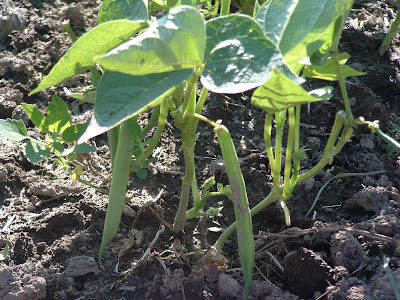
Somehow all those millions upon millions upon millions of urban dwellers must eat, but sadly there is a strong disconnect between people who eat and people who grow or raise. Far too many urban people think food just magically appears on grocery store shelves without consider all the channels that food must take to get there. Someone has to cultivate, plant, harvest, process, transport, package, and otherwise get food into a form that is both recognizable and available. Alternately someone has to raise, care for, butcher, transport, and package food from animal form into a form that is both recognizable and available. These things don't just "happen." Many people work tirelessly and thanklessly behind the scenes to make sure this nation is fed.
And if young people don't do it, what will happen after the older generation retires?
The laws of this land unfairly punish the small farmer. These laws range from the insane death taxes that often force adult children to sell their family's farm, to government goons sending SWAT teams to arrest raw milk farmers. And this is in addition to the every day challenges farmers face from Mother Nature.
The net result? At some point, the only people left to feed the majority of America will be the massive corporate agri-farmers, with people who don't have the heritage and love of the land that small farmers have.
Anyway, just some thoughts for a busy Monday morning as we work to get two large woodcraft orders complete, clean the barn, milk the cow, halter-break a calf, dehorn, weed, water, plant, and cultivate. All before noon.
Now it's not uncommon for young people to leave the family farm and seek their fortunes in the big city. Our own daughters will likely follow that course. What remains to be seen is what our girls -- and millions of other young people who grew up rural -- will do when they mature. Once they're married and have families, the lure of the countryside may overcome the lure of the city. Or maybe I should say, the disadvantages of urban living may overshadow the disadvantages of rural living.
Or it may not. We'll see.
The biggest reason for this migration from rural areas is the identical reason young people have fled for urban lights since the Industrial Revolution: JOBS.
Farming is darn hard work. It's also insecure. We get a taste of it, and we're not even farmers (we're "homesteaders"). But when your entire living comes from the soil, you're vulnerable to drought, floods, and other monkey wrenches from Mother Nature. Frankly a lot of young people no longer see the need (or want to experience) the hard physical labor involved in putting food on America's tables. They'd rather become CPAs or electricians which, while highly necessary jobs, means that someone else is responsible for providing food for the table.
The article states, "Losing people in their 20s and 30s, the prime childbearing years, meant many rural regions were seeing their birth rates decline significantly. Those people who did move to rural areas tended to be older adults past their childbearing years."
When Don and I up and left Sacramento in 1992 shortly after we were married, we were part of that demographic of people in their "prime childbearing years." In fact, that was one of our primary motivators. We didn't want to raise our then-future children in the city. We wanted them to grow up in the country. We wanted them to know where their food originates, and not to develop the cloak of cynicism that is often so necessary to survive in an urban environment. But in order to do that, we had to risk financial uncertainty and create our own employment (those of you who have read Bear Poop and Applesauce understand how we did it).

I can think of no better definition of Don's and my attitude toward rural life than the "Philosophy" on the Countryside Magazine webpage: "It’s not a single idea, but many ideas and attitudes, including a reverence for nature and a preference for country life; a desire for maximum personal self-reliance and creative leisure; a concern for family nurture and community cohesion; a belief that the primary reward of work should be well-being rather than money; a certain nostalgia for the supposed simplicities of the past and an anxiety about the technological and bureaucratic complexities of the present and the future; and a taste for the plain and functional. Countryside reflects and supports the simple life, and calls its practitioners 'homesteaders.'"
What's interesting is how living rural, which used to be the norm, is now considered shocking or even subversive. Don and I faced incredulity and strong discouragement from our friends and families when we left our well-paying jobs in the city in order to face poverty in the country. They thought we were foolish and irresponsible. Folks were literally incapable of understanding WHY we made that choice. Why would we give up well-paying jobs in order to submit to financial uncertainty? It was, in part, because of "a belief that the primary reward of work should be well-being rather than money."
Granted we were young and naive about the hardships we would face, but the lure of well-paying city jobs couldn't overcome our desire for the freedom and independence rural life offered. We liked the thought of not having neighbors breathing down our necks all around us. We still do. The cheek-by-jowl lifestyle which urban living necessitates just has no appeal to us, no matter how many cultural or income-earning opportunities were possible in the city.
But personal issues aside, here's the statistic in the article which absolutely floored me. Did you know that 15% of the US population is spread across 72% of its land area? Which means its corollary -- that 85% of the US population is crammed into 28% of its land area -- is also true.
And even those numbers are wildly skewed. Anyone who's flown over the dry and arid western half of America has seen vast, vast swathes of land without a single person inhabiting. It all has to do with water availability, of course.

All this makes me wonder something very important. If young people are leaving rural areas, who's gonna grow the food?

Somehow all those millions upon millions upon millions of urban dwellers must eat, but sadly there is a strong disconnect between people who eat and people who grow or raise. Far too many urban people think food just magically appears on grocery store shelves without consider all the channels that food must take to get there. Someone has to cultivate, plant, harvest, process, transport, package, and otherwise get food into a form that is both recognizable and available. Alternately someone has to raise, care for, butcher, transport, and package food from animal form into a form that is both recognizable and available. These things don't just "happen." Many people work tirelessly and thanklessly behind the scenes to make sure this nation is fed.
And if young people don't do it, what will happen after the older generation retires?
The laws of this land unfairly punish the small farmer. These laws range from the insane death taxes that often force adult children to sell their family's farm, to government goons sending SWAT teams to arrest raw milk farmers. And this is in addition to the every day challenges farmers face from Mother Nature.
The net result? At some point, the only people left to feed the majority of America will be the massive corporate agri-farmers, with people who don't have the heritage and love of the land that small farmers have.
Anyway, just some thoughts for a busy Monday morning as we work to get two large woodcraft orders complete, clean the barn, milk the cow, halter-break a calf, dehorn, weed, water, plant, and cultivate. All before noon.
Wednesday, February 6, 2013
To the farmer in all of us
A reader sent me this link to a Ram Truck Superbowl commercial which features the incomparable Paul Harvey speaking at a 1978 Future Farmers of America convention.

Here's the text:
And on the eighth day God looked down on his planned paradise and said, “I need a caretaker.” So God made a farmer.
God said, “I need somebody willing to get up before dawn, milk cows, work all day in the fields, milk cows again, eat supper, then go to town and stay past midnight at a meeting of the school board.” So God made a farmer.
God said, “I need somebody willing to sit up all night with a newborn colt, and watch it die, and dry his eyes and say, maybe next year.”
“I need somebody who can shape an axe handle from a persimmon sprout, shoe a horse with a hunk of car tire, who can make harness out of hay wire, feed sacks and shoe scraps. Who, planting time and harvest season, will finish his forty hour week by Tuesday noon, and then pain'n from ‘tractor back,’ put in another seventy two hours. So God made a farmer.”
God said, “I need somebody strong enough to clear trees and heave bales, yet gentle enough to tame lambs and wean pigs and tend the pink combed pullets, and who will stop his mower for an hour to splint the broken leg of a meadow lark.” So God made a farmer.
“It had to be somebody who'd plow deep and straight and not cut corners. Somebody to seed, weed, feed, breed and rake and disc and plow and plant and tie the fleece and strain the milk. Somebody who'd bale a family together with the soft strong bonds of sharing, who would laugh and then sigh...and then reply with smiling eyes when his son says that he wants to spend his life ‘doing what dad does.’”
So God made a farmer.

Trust Paul Harvey to verbalize in beautiful prose the hundreds of thousands of unsung heroes who bring food to America's tables.

God bless farmers.

Here's the text:
And on the eighth day God looked down on his planned paradise and said, “I need a caretaker.” So God made a farmer.
God said, “I need somebody willing to get up before dawn, milk cows, work all day in the fields, milk cows again, eat supper, then go to town and stay past midnight at a meeting of the school board.” So God made a farmer.
God said, “I need somebody willing to sit up all night with a newborn colt, and watch it die, and dry his eyes and say, maybe next year.”
“I need somebody who can shape an axe handle from a persimmon sprout, shoe a horse with a hunk of car tire, who can make harness out of hay wire, feed sacks and shoe scraps. Who, planting time and harvest season, will finish his forty hour week by Tuesday noon, and then pain'n from ‘tractor back,’ put in another seventy two hours. So God made a farmer.”
God said, “I need somebody strong enough to clear trees and heave bales, yet gentle enough to tame lambs and wean pigs and tend the pink combed pullets, and who will stop his mower for an hour to splint the broken leg of a meadow lark.” So God made a farmer.
“It had to be somebody who'd plow deep and straight and not cut corners. Somebody to seed, weed, feed, breed and rake and disc and plow and plant and tie the fleece and strain the milk. Somebody who'd bale a family together with the soft strong bonds of sharing, who would laugh and then sigh...and then reply with smiling eyes when his son says that he wants to spend his life ‘doing what dad does.’”
So God made a farmer.

Trust Paul Harvey to verbalize in beautiful prose the hundreds of thousands of unsung heroes who bring food to America's tables.

God bless farmers.
Saturday, May 12, 2012
Spring chores on the homestead
We have gotten so much done this week on the farm that it will take four or five lengthy blog posts just to describe it all. And boy am I pooped.
This frenzy of work was largely due to a combination of good weather, and the loan of a tractor by our sainted and patient friends Mike and Judy, without whose generosity we'd get a lot less done since our own tractor is still down.
Here are some of the things we got done this week.
Don plowed our garden area. Before:

During:


Some of the tulips we planted last fall are blooming.


After:


Next we had to move some piles in order to reach a pile of manure. We got rid of a wood pile...

...and moved it into a burn pile to burn later.

We moved two salvaged gates out of the way, which weigh several hundred pounds each.


While Don worked moving the manure pile closer to the garden, I did some work in the greenhouse. The tomatoes I planted earlier haven't done much yet...

...but the onions are coming along.

I planted three types of melons, more tomatoes, and more broccoli.


Meanwhile Don took the tractor into the front pasture with the intention of pushing a junk pile together so we could burn it. He did that, and spontaneously decided to disk the pasture as well. This is where we'll be planting spring wheat in a couple weeks.


The mornings are still cold, but the days have been up to 70 or 75F.

This morning sunrise was at 5:23 am. (Yes, I was up to see it.)


Don burned the pile in the front pasture...

...then helped Younger Daughter pile some dried teasel stalks into a separate pile to burn later.


I'll post more pix tomorrow -- it's late and I'm off to bed.
This frenzy of work was largely due to a combination of good weather, and the loan of a tractor by our sainted and patient friends Mike and Judy, without whose generosity we'd get a lot less done since our own tractor is still down.
Here are some of the things we got done this week.
Don plowed our garden area. Before:

During:


Some of the tulips we planted last fall are blooming.


After:


Next we had to move some piles in order to reach a pile of manure. We got rid of a wood pile...

...and moved it into a burn pile to burn later.

We moved two salvaged gates out of the way, which weigh several hundred pounds each.


While Don worked moving the manure pile closer to the garden, I did some work in the greenhouse. The tomatoes I planted earlier haven't done much yet...

...but the onions are coming along.

I planted three types of melons, more tomatoes, and more broccoli.


Meanwhile Don took the tractor into the front pasture with the intention of pushing a junk pile together so we could burn it. He did that, and spontaneously decided to disk the pasture as well. This is where we'll be planting spring wheat in a couple weeks.


The mornings are still cold, but the days have been up to 70 or 75F.

This morning sunrise was at 5:23 am. (Yes, I was up to see it.)


Don burned the pile in the front pasture...

...then helped Younger Daughter pile some dried teasel stalks into a separate pile to burn later.


I'll post more pix tomorrow -- it's late and I'm off to bed.
Monday, April 11, 2011
Farm chic
When I was a teenager, I read a line in a book I've never forgotten: Most Americans would starve standing next to a cow in a field of ripe wheat. The implication, of course, is people have become so helpless and ignorant, so disconnected from our food sources, that we are incapable of knowing how to recognize and harvest food even when we’re literally standing in the midst of it.
I’m sure this line had an unconscious influence on my interest in homesteading, because here I am decades later milking cows and growing wheat. If there was one thing I was determined to master during my adult years, it was how not to starve while standing amidst abundance. And no, this had nothing to do with “prepping” – that wasn’t even on my radar when I was a teenager. I just didn’t like the idea of being totally dependent on someone else to supply me with the basics of life. I didn’t like the idea of being so ignorant of those basics that I couldn’t recognize food when it was all around me.
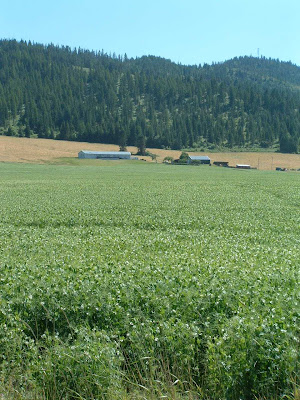
We’ve all heard the statistics about how something like 70% of Americans used to live on farms. Now those numbers are so skewed in the other direction that it’s almost comical: something like 2.5% of Americans now live on farms. Wow. It’s not just the implications of how so few can feed so many; it’s also the implications of how millions of people would starve in a field of ripe wheat because they’ve never seen food in its elemental form.
I’ve even heard stories about how children literally think milk is manufactured in the back rooms of grocery stores and who have no idea where eggs come from. (One story I heard was how a 20-something young woman never knew eggs came from chicken butts, and was so horrified at this information she thereafter refused to eat eggs.)
It used to be that being a farmer was something – well, almost shameful. To come from a farm meant you were lowly, uneducated, dull, suitable only for manual labor and not much else. Remember the sneers and snide comments Laura Ingalls got from Nellie Olsen? Nellie was a town girl and therefore superior. Laura was a farm girl and therefore a rube.
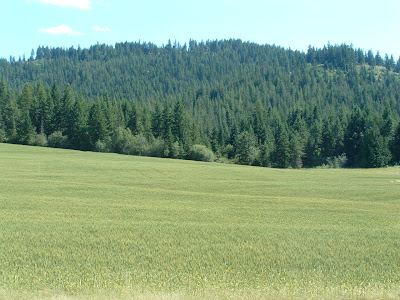
While I won’t say the attitude has totally turned around today – lots of people still consider farms to be nothing more than yucky places full of manure, and farmers are just too stupid to know they’re working knee-deep in cow poop – there has unquestionably been a resurgence of interest in farming, homesteading, and otherwise connecting once again with one’s food sources. There seems to be a deep-seated desire for humans to touch dirt. I think this is a good thing.
In other words, homesteading is now chic. Trendy. Cutting edge.
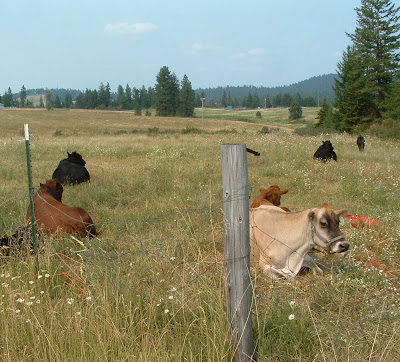
Imagine that. Growing food – something our ancestors have done since the dawn of agriculture – is now a novelty. If I ever have the opportunity to mingle at a cocktail party in New York City and mention I live on a farm, what do you suppose the reaction would be? Perhaps a few lifted lips, but probably a lot more astonishment and disbelief. “Wow! Can you DO that? Do people actually still live on farms?”
In fact – true story – recently I was in conversation with a sophisticated group of people and someone asked, “Do you really live on a farm?” I replied “Yes, of course.” – and there was a chorus of “ooohs” and “aaaahs.” Another time – another true story – I was at a writer’s conference when I was introduced to an author I admire. As we shook hands, she commented on my firm grip (I tend to crush people unless I’m careful). A little embarrassed, I snatched my hand away and said, “I’m sorry, I milk cows.” The author’s eyes widened and she said, “You milk cows??” She couldn't believe it.
Needless to say, with the economy in a tailspin there has been a huge awakening of how vulnerable we are to interruptions of the supply chain. The Japanese people learned the hard way that when a natural disaster strikes, even those unaffected by the immediate tragedy can be impacted in a BIG way when societal infrastructure is interrupted. That’s a lesson all of us should take to heart.
This is why I’m so pleased with the urban homesteading movement. Not everyone can move to twenty acres in the country; so they do what they can, where they are. I love it!
It looks like “farm chic”is here to stay. For awhile at least. More power to it!
I’m sure this line had an unconscious influence on my interest in homesteading, because here I am decades later milking cows and growing wheat. If there was one thing I was determined to master during my adult years, it was how not to starve while standing amidst abundance. And no, this had nothing to do with “prepping” – that wasn’t even on my radar when I was a teenager. I just didn’t like the idea of being totally dependent on someone else to supply me with the basics of life. I didn’t like the idea of being so ignorant of those basics that I couldn’t recognize food when it was all around me.

We’ve all heard the statistics about how something like 70% of Americans used to live on farms. Now those numbers are so skewed in the other direction that it’s almost comical: something like 2.5% of Americans now live on farms. Wow. It’s not just the implications of how so few can feed so many; it’s also the implications of how millions of people would starve in a field of ripe wheat because they’ve never seen food in its elemental form.
I’ve even heard stories about how children literally think milk is manufactured in the back rooms of grocery stores and who have no idea where eggs come from. (One story I heard was how a 20-something young woman never knew eggs came from chicken butts, and was so horrified at this information she thereafter refused to eat eggs.)
It used to be that being a farmer was something – well, almost shameful. To come from a farm meant you were lowly, uneducated, dull, suitable only for manual labor and not much else. Remember the sneers and snide comments Laura Ingalls got from Nellie Olsen? Nellie was a town girl and therefore superior. Laura was a farm girl and therefore a rube.

While I won’t say the attitude has totally turned around today – lots of people still consider farms to be nothing more than yucky places full of manure, and farmers are just too stupid to know they’re working knee-deep in cow poop – there has unquestionably been a resurgence of interest in farming, homesteading, and otherwise connecting once again with one’s food sources. There seems to be a deep-seated desire for humans to touch dirt. I think this is a good thing.
In other words, homesteading is now chic. Trendy. Cutting edge.

Imagine that. Growing food – something our ancestors have done since the dawn of agriculture – is now a novelty. If I ever have the opportunity to mingle at a cocktail party in New York City and mention I live on a farm, what do you suppose the reaction would be? Perhaps a few lifted lips, but probably a lot more astonishment and disbelief. “Wow! Can you DO that? Do people actually still live on farms?”
In fact – true story – recently I was in conversation with a sophisticated group of people and someone asked, “Do you really live on a farm?” I replied “Yes, of course.” – and there was a chorus of “ooohs” and “aaaahs.” Another time – another true story – I was at a writer’s conference when I was introduced to an author I admire. As we shook hands, she commented on my firm grip (I tend to crush people unless I’m careful). A little embarrassed, I snatched my hand away and said, “I’m sorry, I milk cows.” The author’s eyes widened and she said, “You milk cows??” She couldn't believe it.

Needless to say, with the economy in a tailspin there has been a huge awakening of how vulnerable we are to interruptions of the supply chain. The Japanese people learned the hard way that when a natural disaster strikes, even those unaffected by the immediate tragedy can be impacted in a BIG way when societal infrastructure is interrupted. That’s a lesson all of us should take to heart.
This is why I’m so pleased with the urban homesteading movement. Not everyone can move to twenty acres in the country; so they do what they can, where they are. I love it!
It looks like “farm chic”is here to stay. For awhile at least. More power to it!
Thursday, August 5, 2010
Dust to Dust

I have a new column up at RegularGuy.com entitled "Dust to Dust." That's one nice thing about this blog and these columns - whenever an issue crops up that makes me want to blow steam, these outlets let off a little pressure.
Enjoy!
Monday, July 6, 2009
Ding dong, the hay is stacked!

Our string of miracles continues!
We were wondering how to get our hay stacked between rainstorms. The one neighbor who has a tractor big enough to lift thousand-pound bales was working twelve-hour days, seven days a week in a town an hour south of us (meaning, he was putting in fourteen-plus-hour days). Ironically, he had been hired to...put up hay on a huge ranch.
In came the rain, which interrupted the haying, which gave our neighbor an unexpected two days off, which meant he had time to stack our hay today! Hooray!


We got 24 tons, about a ton per acre, which is a really lousy output for a fertilized field. Hay production is down all over the Inland Empire (as they call this section of the northwest). But it will keep our livestock comfortably over the winter, with a little to spare for friends who do us favors...like our neighbor. He got two tons in thanks for stacking our hay.
Last winter's tarp can pull duty for another winter, but it's not nearly long enough to tarp the entire line. We have rain coming in on Wednesday, so tomorrow I'll get another tarp to finish covering the hay. Later in the summer our neighbor will move half this hay - twelve tons - into our barn. But neither he nor we have time to do that right now, between rain and work.
For now, we're giving thanks for the string of minor miracles (neighbors and friends with BIG equipment) that gave us hay for the winter.
An old farmer's advice
• Your fences need to be horse-high, pig-tight and bull-strong.
• Keep skunks and bankers at a distance.
• Life is simpler when you plow around the stump.
• A bumble bee is considerably faster than a John Deere tractor.
• Words that soak into your ears are whispered...not yelled.
• Meanness don't jes' happen overnight.
• Forgive your enemies. It messes up their heads.
• Do not corner something that you know is meaner than you.
• It don't take a very big person to carry a grudge.
• You cannot unsay a cruel word.
• Every path has a few puddles.
• When you wallow with pigs, expect to get dirty.
• The best sermons are lived, not preached.
• Most of the stuff people worry about ain't never gonna happen anyway.
• Don't judge folks by their relatives.
• Remember that silence is sometimes the best answer.
• Live a good, honorable life. Then when you get older and think back, you'll enjoy it a second time.
• Don't interfere with somethin' that ain't bothering you none.
• Timing has a lot to do with the outcome of a Rain dance.
• If you find yourself in a hole, the first thing to do is stop diggin'.
• Sometimes you get, and sometimes you get got.
• The biggest troublemaker you'll probably ever have to deal with, watches you from the mirror every mornin'.
• Always drink upstream from the herd.
• Good judgment comes from experience, and a lotta that comes from bad judgment.
• Lettin' the cat outta the bag is a whole lot easier than puttin' it back in.
• If you get to thinkin' you're a person of some influence, try orderin' somebody else's dog around.
• Live simply. Love generously. Care deeply.
• Speak kindly. Leave the rest to God.
• Keep skunks and bankers at a distance.
• Life is simpler when you plow around the stump.
• A bumble bee is considerably faster than a John Deere tractor.
• Words that soak into your ears are whispered...not yelled.
• Meanness don't jes' happen overnight.
• Forgive your enemies. It messes up their heads.
• Do not corner something that you know is meaner than you.
• It don't take a very big person to carry a grudge.
• You cannot unsay a cruel word.
• Every path has a few puddles.
• When you wallow with pigs, expect to get dirty.
• The best sermons are lived, not preached.
• Most of the stuff people worry about ain't never gonna happen anyway.
• Don't judge folks by their relatives.
• Remember that silence is sometimes the best answer.
• Live a good, honorable life. Then when you get older and think back, you'll enjoy it a second time.
• Don't interfere with somethin' that ain't bothering you none.
• Timing has a lot to do with the outcome of a Rain dance.
• If you find yourself in a hole, the first thing to do is stop diggin'.
• Sometimes you get, and sometimes you get got.
• The biggest troublemaker you'll probably ever have to deal with, watches you from the mirror every mornin'.
• Always drink upstream from the herd.
• Good judgment comes from experience, and a lotta that comes from bad judgment.
• Lettin' the cat outta the bag is a whole lot easier than puttin' it back in.
• If you get to thinkin' you're a person of some influence, try orderin' somebody else's dog around.
• Live simply. Love generously. Care deeply.
• Speak kindly. Leave the rest to God.
Do you believe in miracles?

The one thing farmers must contend with is the weather. And oh boy, can that be a major factor.
A local farmer, Phil, cut our hay last week. Haying equipment is expensive (take a look at the size of this baler!) so we must depend on Phil to cut and bale for us, since he has the equipment and we don't.

When hay is cut, you let it lie for a few days to dry. The weather was clear and hot during this period, curing the hay perfectly. On Saturday (yes, the 4th of July - farmers never stop this time of year) Phil came and raked the hay into windrows, which are big fluffy rows. This not only "stirs" the hay to better cure it, but it gets the hay ready to bale.
This is the nail-biting period, because if it rains while the hay is on the ground, the hay is ruined. We've already spent over a thousand bucks fertilizing the field, as well as paying Phil to mow and windrow it. If it rained now, we could kiss the money - and hay - goodbye.
And, naturally, the weather reports called for thunderstorms with rain.
Trouble is, farmers are super-dooper busy this time of year. They have a lot of fields they're mowing and baling, not only their own, but others' (like us) as well. I can hardly call Phil and ask him to put us on the top of the list for baling, as he's doing the best he can to get to everyone's fields.
Late yesterday afternoon Phil came and baled our hay. Thank God!

I went out and paid him on the spot, and we watched a black mass of ominous clouds gathering on the horizon. Within half an hour after he left, the wind kicked up and started blasting us - the gusts must have been over 70 mph. Then thunder and lightening. Then - you guessed it - torrential rains. I was trying to milk a restless Matilda while my husband and kids were running around battening down hatches - buttoning up the chickens, grabbing the plastic lawn chairs that were being flung around the driveway by the wind, that kind of thing.
But the hay is baled. True, it's lying out in a wet field getting wet, but the bales are tight and hopefully will shed the water. These are thousand-pound bales.

To folks who don't have livestock to feed through an eight-month winter, this may seem like petty stuff. But for us, Phil's timeliness was a minor miracle.
It's still raining. Baled hay cannot resist rain forever. I'm praying the rain stops long enough to let the hay dry out, so we can stack and tarp it.
Subscribe to:
Comments (Atom)