Sunday, May 19, 2013

A quarter-ton of beef

On Friday, I went down to pick up the meat from the two animals we had butchered a couple weeks ago. We have about 650 lbs. of beef coming to us, only 150 lbs. of which we'll be keeping.

The drive down to Potlatch is always so pretty this time of year. The Palouse is almost impossibly green with early winter wheat beginning to grow. And the isolated farms look story-book picturesque.


The butchers keep their facility squeaky-clean.


Here's the freezer unit. Each customer's meat is kept in labeled trays.


Here's the cooler unit, where they hang carcasses for a week or ten days, which tenderizes the meat.


Here's some of the regular as well as specialty services these butchers offer.


Anyway, I loaded my car to groaning with packaged beef, and drove home.


Next step: clean out the freezer!


In order to fit everything in, we had to be brutal in selecting what stays and what goes. Don made some wooden partitions to help keep things sorted and organized.


We inventoried as we packed the freezer so we would know what we have.


A lot of people from our church are interested in the meat, so the freezer won't be this way for long.


It took a lot of creative maneuvering and clever packing, but we finally got almost everything in; though forty-seven pounds of overflow ground beef are being stored in a neighbor's freezer.


With butchering costs, the price of this beef (organic and grass-fed!) is about $1/lb. Of course that doesn't take into effect feed costs, which I'm estimating adds another ten cents per pound.

We haven't bought beef in so many years that I haven't paid attention to beef prices. So last week when I was in Costco (whose beef is, presumably, among the cheapest available), I wrote down some costs. And oh. My. Goodness. I was horrified. When did beef prices skyrocket like this? Who on earth can afford to pay $12 a pound for ribeye steak? No wonder folks are interested in our meat! Raising our own beef is definitely worth it.


And what are having for tonight's neighborhood potluck dinner? Why, pot roast of course!

Friday, May 17, 2013

Bellows from the barn

I woke up about 2:50 am this morning and heard bellowing in the barn. "Sounds like a cow's in labor," I said.

"How do you know?" Don mumbled sleepily.

I got up and got dressed. More bellowing came from the barn.

"Oh," he said. "Let me know if you need help."

The two heifers who have been tucked in the corral for the last week are first-time moms (by definition a "heifer" is a female cow who hasn't yet given birth; presumably her status changes into "cow" the moment the calf drops) and I wanted them close just in case they had any difficulties birthing or nurturing their babies.

The night was fairly mild (40F) but very foggy. By the time I stumbled into the corral with a flashlight at 3 am, I saw that Victoria had already dropped her baby and was vigorously licking it. I tried to take photos, but the camera flash only picked up the misty fog and made it look like snow.


I stayed in the corral for quite awhile and watched by flashlight. For a long time Victoria danced around her calf in some befuddlement, bellowing and licking, bellowing and licking. Her back was still hunched, and I wanted to make sure she wasn't having twins. But as the night waned and dawn crept in, it was clear her discomfort stemmed from the fact that the placenta hadn't dropped.

The calf (a little girl) stumbled to her feet and began searching for the udder, but Victoria kept dancing away, not quite sure what this strange creature wanted. But 5 am when it got light enough to take photos, Victoria was sorta kinda getting the hang of it. At least she allowed the baby to get some life-nourishing colostrum in her.


Dawn came in quiet mist.


Victoria was still uncomfortable because of the placenta, but she calmed down enough to let this strange little creature that came out of her, nurse. First-time cows are pretty funny -- you can almost hear them say, "What IS this thing?" when this little calf stumbles toward them searching for the udder.


Still hunched and uncomfortable.


But the calf is strong and a healthy nurser.


She's a pretty little thing with rosy rings around her eyes.


By 6 am, Victoria lay down, exhausted. She still hadn't passed the placenta.


Unable to stay still for long, she was soon on her feet. Despite her cramps and contractions, she allowed the calf to nurse.


At 6:50 am, I just happened to be photographing the calf when Victoria hunched once again and strained. I was pleased to see the placenta make its way out at last.


Rather ugly, ain't it?


Here it comes!


Ahhhh. Now she'll feel better!


After this, Victoria perked right up and got down to the serious business of learning to mother. She's doing very well.


Because of the rosy rings around the calf's eyes, we decided to call her Rosy.


Little Rosy is just the second out of eight calves we're expecting this season. Calves for sale in a year!

Sad loss

I just learned this morning that Elijah, Lydia's father, passed away.


The wonderful folks at Agape Ranch are the reason we have Lydia, and Elijah was such an integral part of Jim and Carol's lives that I can't imagine them without him.


The term "gentle giant" certainly applied to Elijah.


He was well loved by everyone, but none more so than Carol and Jim.


Godspeed, Elijah.

Amazing what kids can do

I am continuously delighted by my girls. It's amazing what they can do when they put their minds to it.

As a Venture Scouts project, Younger Daughter was required to pull together a meeting that reflected a hobby. She decided to put on a writer's workshop since she has a passionate interest in writing.

All by herself she contacted the Idaho Writer's League and presented her idea, and asked if anyone was willing to donate their time to this project. The IWL chapter president kindly passed this request on to the members, and Younger Daughter was blitzed with offers from writers generously willing to participate by giving a workshop.

She contacted the Coeur d'Alene public library about a meeting room, set a date, signed the required contracts (which I co-signed since she's a minor) and even paid the cleaning fee out of her own pocket, as was required by contract since she offered refreshments. The library's meeting room is only available for four hours on Saturdays, so Younger Daughter had to limit the number of workshop to three. In order to present as broad a spectrum of subjects as possible, she selected three writers (myself included) to give seminars on freelance writing, self-publishing, and fiction writing.

She kept in touch with her speakers and, as the day grew closer, she pulled together an advertisement (which I mocked up for her). She then sent this to local colleges, vocational schools, high schools, coffee shops, and placed the information in the Coeur d'Alene Press.


Attendance was modest (five people), but all five people were eager to learn, attentive to the speakers, full of excellent questions, and went home very very satisfied.


Younger Daughter welcomed the attendees to the workshop, introduced each speaker, thanked both the attendees and the speakers afterward, and followed up with thank-you notes to those who had helped her out.

This project was on par with Older Daughter's Venture Scouts project last November, which was to put on a music recital in a nursing care facility.

I'm so proud of my girls for having the gumption to pull together these kinds of activities.

Thursday, May 16, 2013

Udder shots

I am (temporarily) posting some udder photos for illustration purposes for a Backwoods Home Magazine dairy article I just submitted. These photos are so the editor can select which ones she prefers.

Photo 420 - Jersey/Dexter cross, three years old, second calving, recently freshened. Note the even floor (all four teats same length) and tight udder attachment.


Photo 438 - Same Jersey/Dexter cross as in Photo 20.


Photo 439 - Jersey/Dexter cross nursing her calf.


Photo 428 - Purebred Jersey heifer, 2.5 years old, nearly ready to have her first calf. Tight udder attachment, even floor.


Photo 431 - Same purebred Jersey heifer shown in Photo 428.


Photo from 2/10/11 - Purebred Jersey cow, approximately eight years old, sixth calf. Note the massive and pendulous udder with stretched ligaments and poor udder attachment.


Photo 480 - Purebred Jersey cow, approximately ten years old. Note the pendulous udder with stretched ligaments and poor attachment.


Wednesday, May 15, 2013

The basics of kitchen equipment

I bought a new toy this week from a thrift store: a pastry blender. It cost a dollar.


I tried it for the first time while making biscuits for breakfast, and it worked just great.

I'd never used one of these gizmos before, but after watching a neighbor make biscuits with one, it looked like a spiffy idea. While a pastry blender isn't a necessity -- I've spent over twenty years making biscuits and pie crusts without it -- it was delightfully handy and easy to use. So, it's been added to my inventory of kitchen tools.

When Don and I were first married in 1990, I had only the most basic kitchen implements: some pots and pans, a few utensils, cups, etc. As I began cooking more, I gradually added more items that made cooking more convenient -- cookie sheets, measuring cups and spoons, mixing bowls, a bread board, a cutting board, etc. Since I'm not a gourmet cook I don't have "gourmet" items in my kitchen, but I have what is needed to cook from scratch.


Sometimes I am startled by what people lack in their kitchen. I'm not talking about newlyweds just getting started in life; I'm talking about established families whose kitchens lack mixing bowls or pie pans or a rolling pin. I recently met someone who didn't even own a single measuring spoon.


I understand why this is. It's because so few people cook from scratch anymore. People are busy, convenience food is cheap and abundant, and the art of a homemade meal has become rarer.

I don't pretend to be a culinary genius in the kitchen (in fact, I actually rather dislike cooking though I do enjoy baking) but knowing how to cook from scratch is, I feel, important. No, more than important -- essential.


Scratch cooking is one of those unheralded and under-appreciated skills that we should all learn because it's the answer to an obvious question: What would you do if frozen pizza or canned chile or boxed macaroni-and-cheese were not available? This is a particularly important question for Preppers because it affects what foods they store.

With a few exceptions, most of your food storage should be ingredients, not prepared food. This means basic staples from which you can assemble complete meals. Most staples (properly stored) will also last longer than most processed foods.

Endless numbers of Preppers have stored away endless amounts of rice and beans, but often they lack the ability to cook up those rice and beans in tasty ways. Worse, lots of people have wheat stored away, without any real comprehension of how to turn that wheat into a loaf of bread.

Our pioneer ancestors were experts at cooking from scratch. They had no choice. The food they grew, raised, or caught was in “scratch” form and needed to be transferred into something edible. And yet pioneer recipes have come down through the generations as testimonies of the wonderful and delicious ways in which basic foods could make marvelous and nutritious meals.


Sadly that ability –- to take raw ingredients and create delicious meals out of them –- is either watered down or gone. We are so entirely dependent on prepared foods from the grocery store (or deli or restaurant) that the definition of "scratch" cooking means making a cake from a boxed mix.

So challenge yourself to take a bag of dried beans and make a meal out of it. Learn how to cook grains, beans, and rice, in addition to meats, fruits, and vegetables. For an additional challenge, grow some of those component ingredients yourself. Make note, then acquire, the kitchen implements necessary to create meals from scratch.
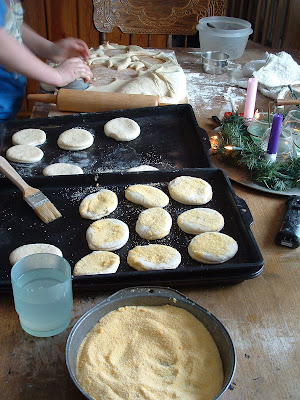

Stocking the kitchen with the basic tools for scratch cooking doesn't have to be expensive, as my pastry blender demonstrates. Many items of excellent quality can be found in thrift stores.

So tell me -- what's your "must have" nonelectric kitchen tool you can't live without? Post it so others who are just beginning to stock their kitchens can learn.